

What does drought resistant mean?
A drought-resistant plant has developed its own mechanisms to survive with little water: deep roots that reach water tables, waxy or hairy leaves that reduce evapotranspiration, or the ability to store water in its tissues. It doesn't mean they need no watering (especially during the establishment period) but that, once adapted, they survive well on natural rainfall.
Mediterranean species for the garden
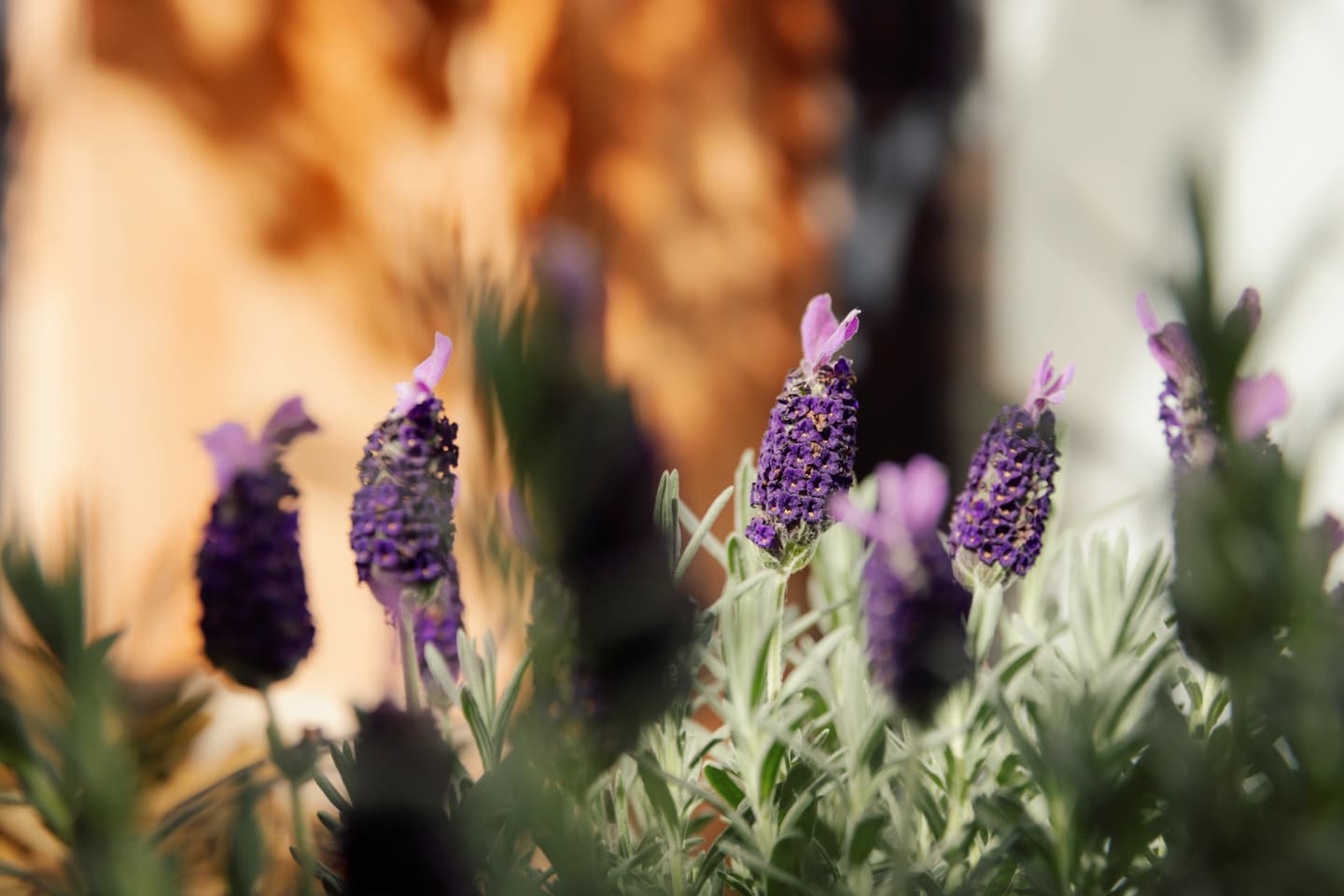
Mediterranean plants are, by nature, the most adapted to the Portuguese climate. We highlight: Lavandula (lavender), Rosmarinus officinalis (rosemary), Cistus (rock rose), Pittosporum, Teucrium, Santolina, Agapanthus and Strelitzia. These species thrive with minimal intervention, attract pollinators and create gardens with character.
Succulents and gravel — the low-maintenance garden
For very exposed spaces or those with little soil, succulents and crassulaceans are the ideal solution. Aeonium, Agave, Aloe, Echeveria and Sedum tolerate intense heat, poor soils and long periods without rain. Combined with decorative gravel, they create contemporary compositions with great visual impact and almost zero maintenance.
How to prepare soil for xerophytic plants
Success starts with soil preparation. Use well-draining substrates: a mix of soil, coarse sand and perlite in a 2:1:1 ratio. Avoid heavy clay soils that retain too much moisture and rot roots. At planting time, incorporate a low-nitrogen slow-release fertiliser to encourage rooting without forcing excessive growth.
Beautiful garden with less water
Discover drought-resistant species available in our store.